He Watched His Mother Die at 13. Twenty Two Years Later, He Returned During Lunar New Year: The Zhang Koukou Case
A childhood memory that never left
In 1996, in a rural village in Nanzheng District near Hanzhong, Shaanxi Province, a violent argument between neighbors ended in a death that would echo for decades.
Zhang Koukou was thirteen years old when his mother became involved in a dispute with members of the neighboring Wang family. The confrontation escalated into a physical fight. Court records later confirmed that during the altercation, a seventeen year old member of the Wang family, Wang Zhengjun, struck Zhang’s mother in the head with a wooden stick.
She died from the injury later that day.
At the time, the two families were not seen as equals in the village.
The Wang family was considered relatively well-off and locally influential, while Zhang Koukou’s family lived more modestly.
That imbalance, some observers later said, added to the resentment that lingered after the 1996 case was closed.
Reports from the case indicate that Zhang witnessed the aftermath of the attack and saw his mother’s injuries, an experience that would later be referenced in court as something he never forgot.
For most of the village, the case moved into the legal system and eventually faded from daily life. For Zhang Koukou, it did not.
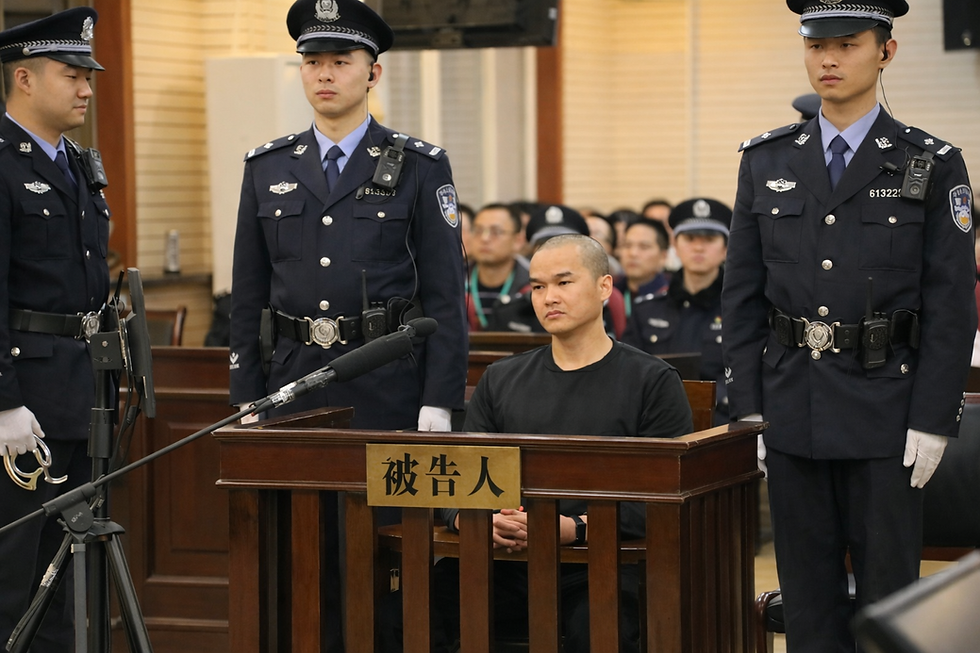
The trial that followed
Wang Zhengjun was prosecuted and convicted of intentional injury resulting in death. Because he was a minor, the court imposed a reduced sentence. Public records indicate he served several years in prison before being released.
Legally, the case was closed. Emotionally, it was not.
During later testimony, Zhang Koukou stated that he believed the punishment had been too lenient and that the loss of his mother had never truly been answered.
The years in between
As Zhang grew older, his life appeared outwardly ordinary. Reporting from Chinese media and court summaries indicates that he served for a period in the military as a young adult. After leaving service, he worked various temporary jobs and lived quietly, largely out of public attention.
People who later spoke about him described someone reserved and private. There were no major public records of violence or crime connected to him during those years.
But the memory of 1996 remained present. During his later confession, Zhang stated that he had thought about revenge for years.
A letter written before everything changed
Before the events of 2018, Zhang Koukou wrote a handwritten letter to his father.
According to court reporting, the letter explained what he intended to do and asked that no one seek revenge after him. The contents suggested he understood the consequences he was likely to face and believed the path he was choosing would end his own life as well, one way or another.
The letter would later become one of the clearest pieces of evidence that what followed had been planned, not spontaneous.
February 15, 2018: Lunar New Year
Lunar New Year is traditionally a time when families return home, gather for meals, and spend the evening together.
That night, Zhang Koukou went to the Wang family home.
Over a short period of time, he killed three people: Wang Zhengjun, the man responsible for his mother’s death, along with Wang Zhengjun’s brother and their father.
Court records and reporting confirm that a knife was used and that the attack was deliberate and targeted.
Afterward, Zhang fled into nearby mountainous terrain.
For several days, authorities searched the area. Then Zhang surrendered to police.
During questioning, he admitted to planning the killings and stated that he had acted to avenge his mother.
The trial and the public reaction
The case quickly drew national attention in China.
Some members of the public expressed sympathy for the trauma Zhang had experienced as a child. Others focused on the fact that three people had been killed and that the law could not allow personal revenge to replace the justice system.
Court proceedings confirmed that the killings had been premeditated. Zhang Koukou was convicted of intentional homicide and additional charges related to property destruction.
The court imposed the death penalty.
Appeals were filed and reviewed, but the sentence was upheld.

2019: The end of the case
In July 2019, after final approval by the Supreme People’s Court, Zhang Koukou was executed.
Before the sentence was carried out, he was allowed a final meeting with family members, a standard procedure under Chinese law.
With that, a story that began with a village dispute in 1996 came to an end more than two decades later.
Case Facts
Location: Nanzheng District, Hanzhong, Shaanxi Province, China
Years: 1996, 2018, 2019
Victims: Zhang Koukou’s mother in 1996; three members of the Wang family in 2018
Responsible persons: Wang Zhengjun (1996 death, convicted as a minor); Zhang Koukou (2018 killings, convicted)
Outcome: Death sentence upheld on appeal; Zhang Koukou executed in July 2019
Read Next / Related Cases


Comments